Tuff Shed Site Prep & Utilities: The Riverside Owner’s Guide
We stock and install Tuff Shed-compatible site prep and utility packages for Riverside homeowners, with typical full installations running between $2,800 and $6,500 depending on pad size, electrical run length, and site conditions. Most Riverside jobs are completed within 3 to 5 business days once permits clear. Owners usually discover site prep was skipped or done poorly when a shed door starts binding, water pools at the base after winter rains, or the power trips whenever they plug in more than a light bulb.
The honest truth: Tuff Shed builds a solid structure, but the shed is only as stable as what’s underneath it. In Riverside’s decomposed granite and clay-heavy soils, a shed set on bare ground or a thin gravel bed will shift within two seasons. We see it all the time near the Mission Inn district, where older lots slope just enough to send runoff straight under a shed floor.
Benson ADU Riverside is an independent service provider and is not affiliated with Tuff Shed. We work with Tuff Shed products because we trust the build quality, but we don’t speak for the brand.
Which Tuff Shed Models This Applies To
Site prep and utilities work applies to every Tuff Shed line we touch in Riverside: the Premier Pro series, the Premier Ranch, the Tall Barn, and the Sundance models. The gotcha is that each series has different floor framing specs, which changes how the pad needs to be leveled and anchored. Premier Pro units come with a heavier floor system rated for more point load, so the pad tolerance is tighter than what a Premier Ranch calls for.
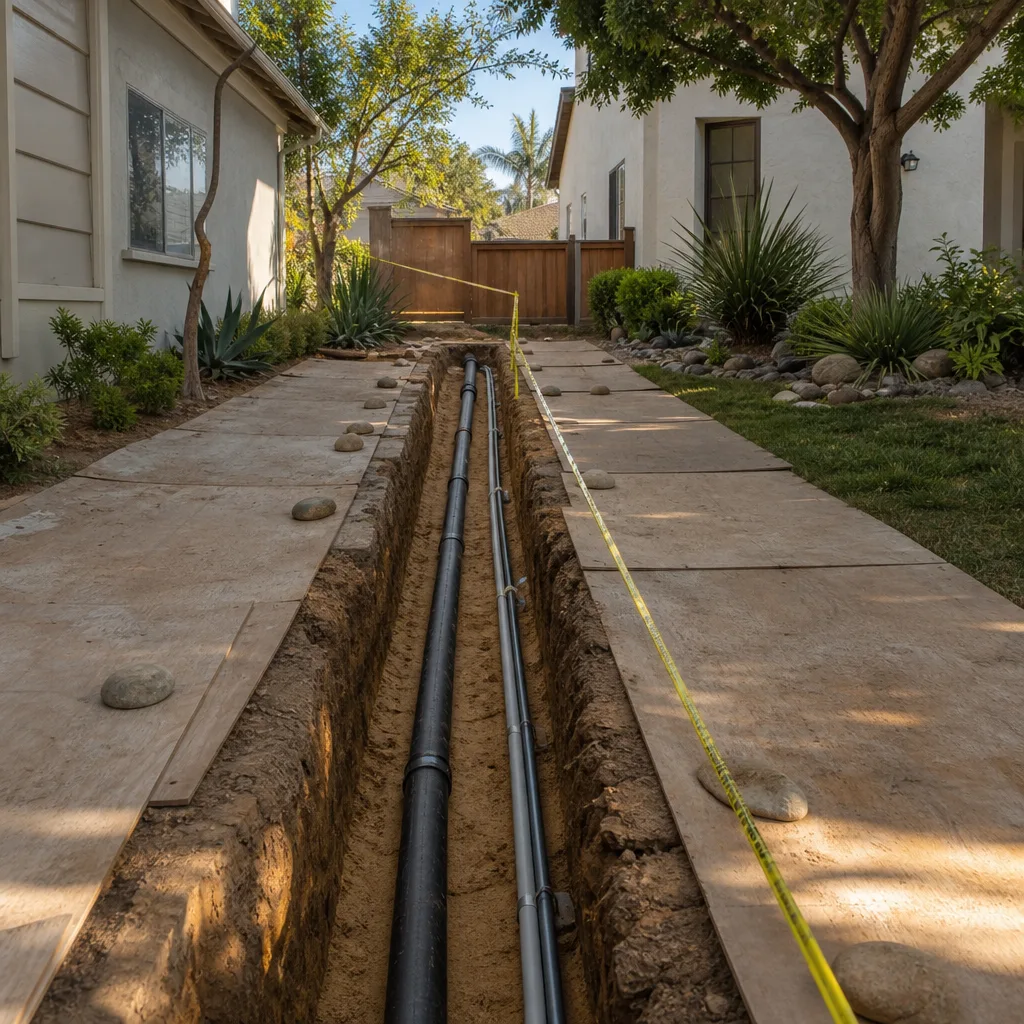
Here’s the compatibility issue most owners don’t know about: Tuff Shed’s installation crews only handle the shed itself. Anything below the floor system is your responsibility. That means the concrete pad, gravel base, pier blocks, vapor barrier, and every inch of electrical conduit are on you unless you hire someone like us. If your shed was dropped on an existing slab, check whether the slab extends at least 6 inches past the shed footprint on all sides. If it doesn’t, water will wick under the floor framing and you’ll get rot before the shed turns five.
OEM versus aftermarket: Tuff Shed doesn’t sell site prep products directly, so there’s no OEM-versus-aftermarket decision for the pad itself. What matters is matching the anchor system to both the shed series and Riverside’s wind and soil conditions. We use Simpson Strong-Tie anchors on every Tuff Shed install, with spacing determined by the shed’s engineered wind load for this region. Cheap wedge anchors from a hardware store strip out in Riverside’s sandy loam within a year.
Signs Your Tuff Shed Site Prep & Utilities Is Failing
- Doors that bind or stick seasonally. Riverside’s clay soil expands with winter moisture and contracts in summer heat. If your shed door works fine in August but catches in February, the slab or pier blocks are moving. Underlying cause: inadequate base depth or missing gravel drainage layer.
- Visible water staining on the bottom 4 inches of wall framing or flooring. The vapor barrier under a Tuff Shed is thin and only works if the site was graded to shed water away. Staining means runoff is pooling under the floor. Underlying cause: pad sits too low relative to surrounding grade.
- Electrical outlets that trip a breaker every time you run a saw or compressor. Tuff Sheds ship with minimal electrical provisions, and bolt-on solutions often undersize the circuit. Underlying cause: wire gauge too thin for the equipment, or a shared circuit with the house that was never designed for shed loads.
- Cracks radiating across the pad within the first two years. Hairline cracks are normal. Cracks wide enough to catch a fingernail mean the pad was poured too thin or without proper compaction underneath. Underlying cause: no base rock or sand layer, or concrete less than 4 inches thick.
- Visible gap between the shed floor and the pad or blocks on one corner. This is the most common failure in Riverside’s older foothill neighborhoods. Underlying cause: pier blocks set on uncompacted fill, which settles unevenly the first year.
Replacement Cost & What’s Included
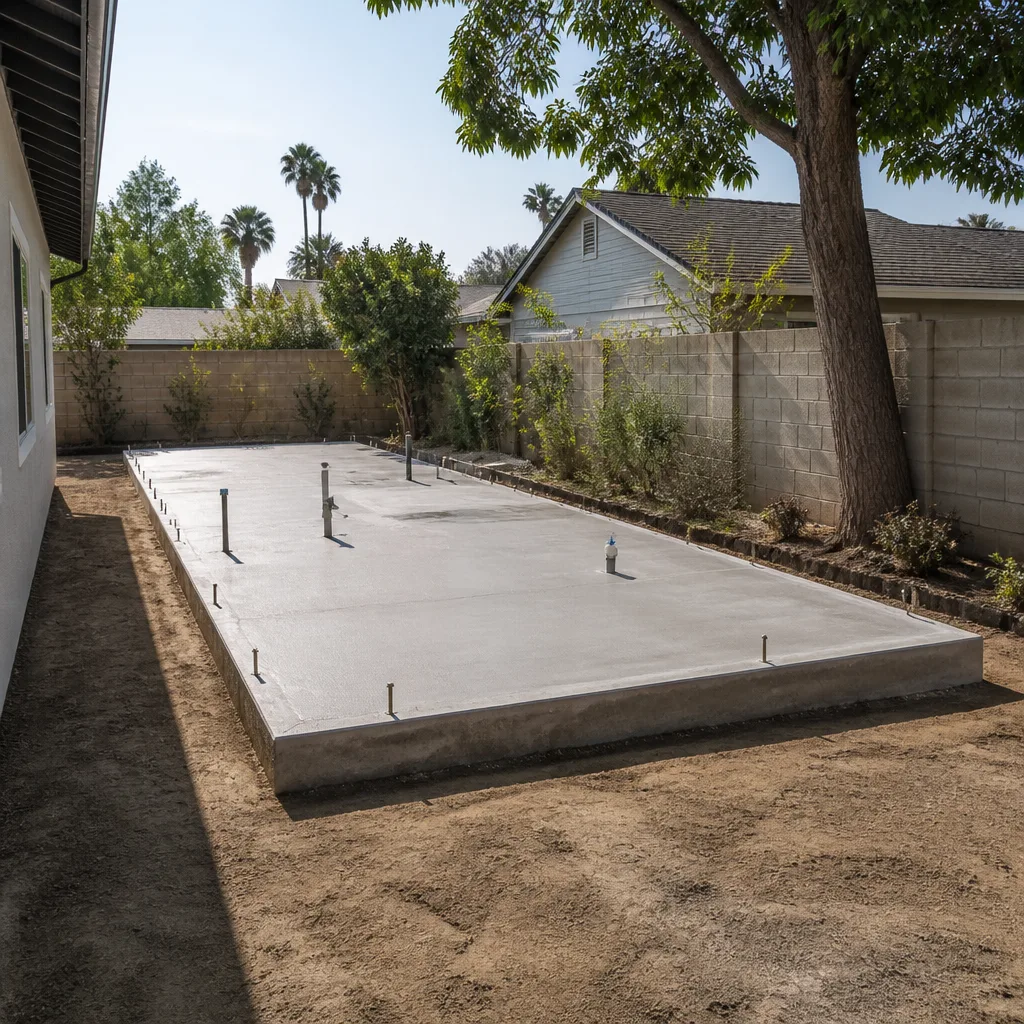
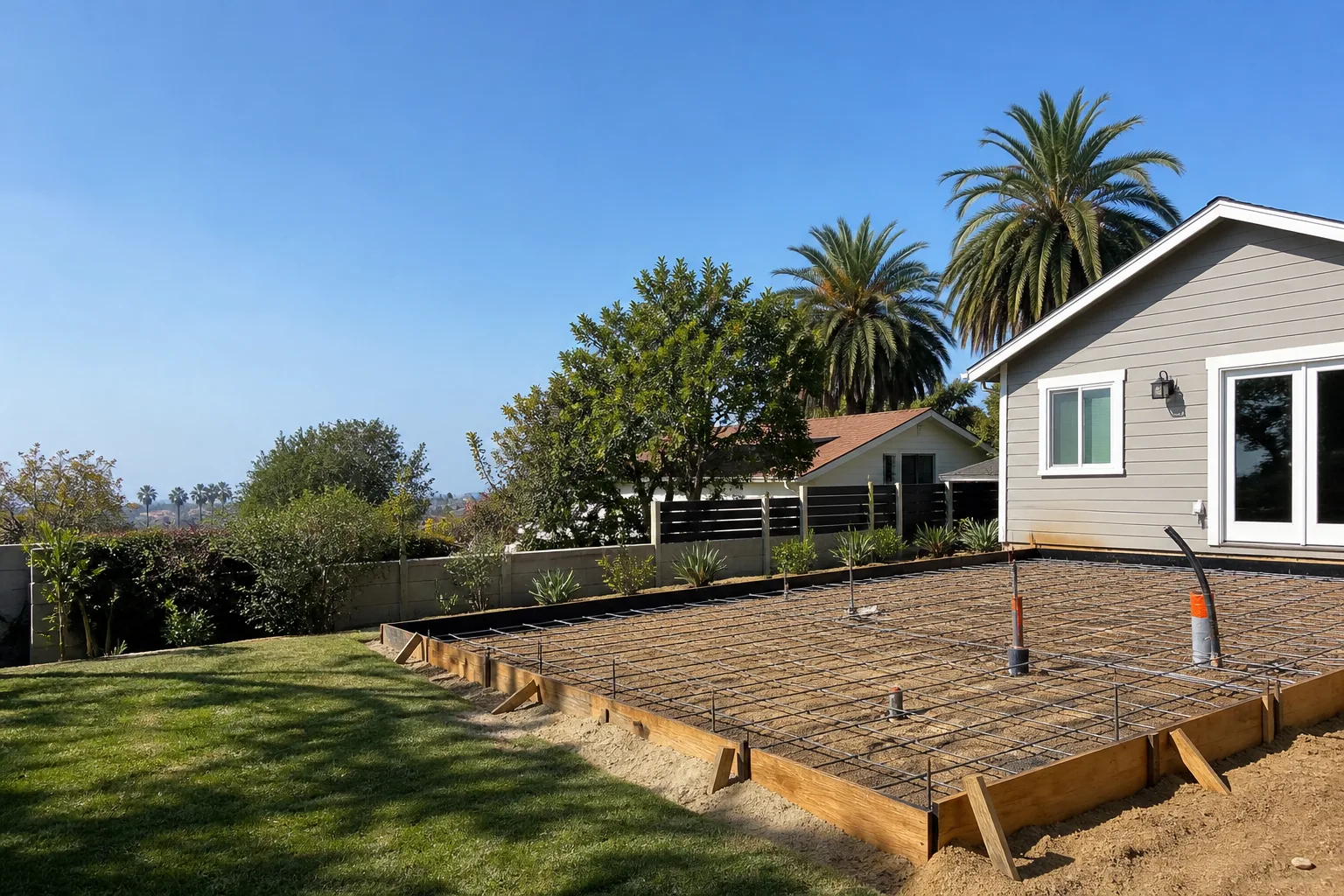
For a standard 10×12 Tuff Shed in Riverside, a full site prep and utilities package runs $3,400 to $5,800 installed. That includes a compacted gravel base, 4-inch concrete pad with rebar or wire mesh, anchor bolts matched to the Tuff Shed floor frame, a dedicated 20-amp circuit run from your main panel, and 3 to 4 interior outlets plus a light. If your shed sits far from the panel or requires trenching through hardscape, the electrical portion alone can add $800 to $1,500.
What drives the range: pad size, whether we’re demolishing and hauling an old failed slab, trenching distance for the electrical run, and whether the city requires a soils report for your lot. Riverside’s permitting fees vary by project scope, and we include those line-by-line in the written quote.
Every site prep and utilities job from Benson ADU Riverside gets a written price before work starts, a written guarantee, and the 365-Day Done Right Promise: if the pad shifts or the electrical fails within a year, we come back and make it right. No change orders, no surprise line items at the end.
DIY or Call Us?
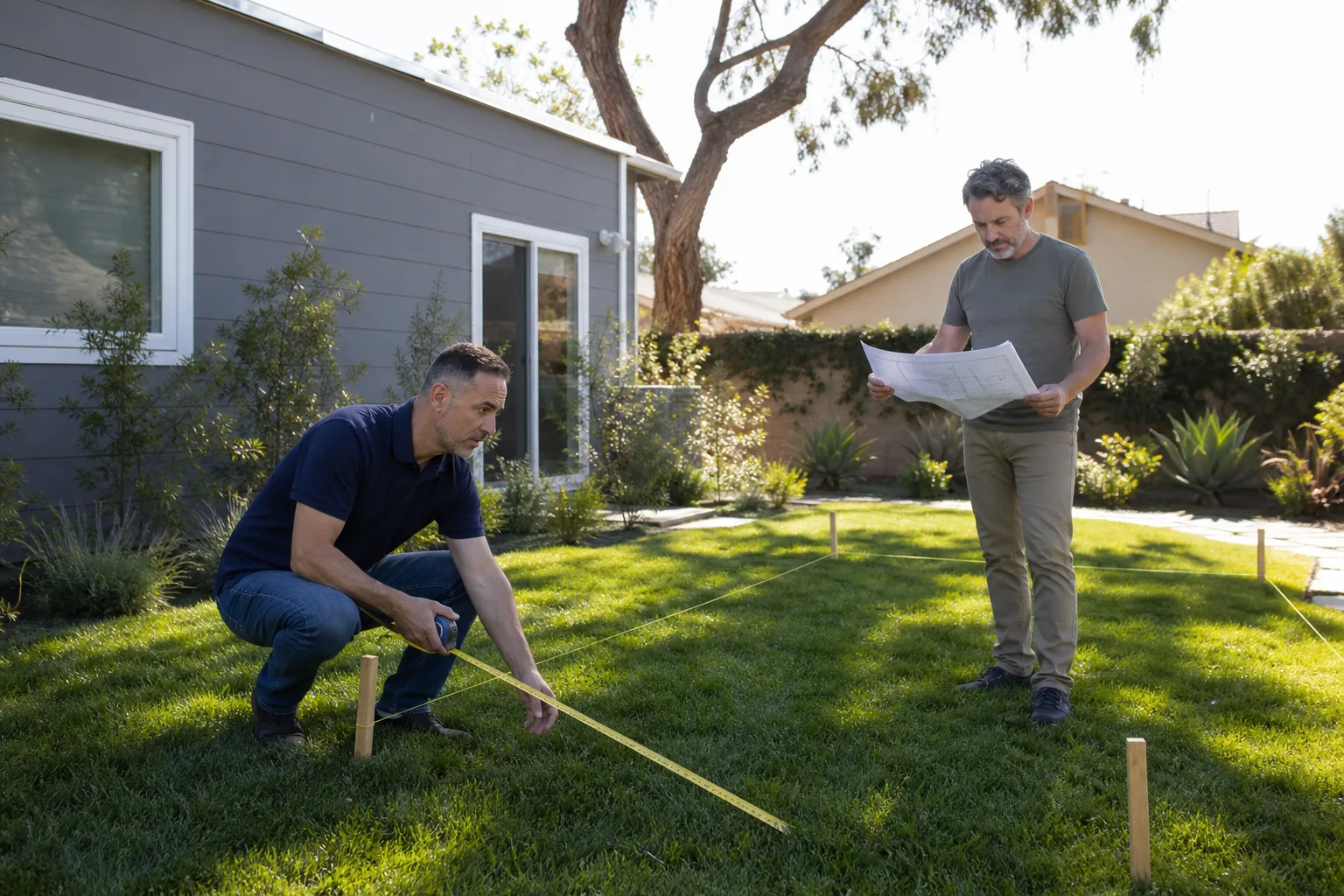
Here’s the honest split. You can safely handle basic prep tasks: clearing vegetation, marking the pad outline, and checking your existing slab with a 4-foot level to see if it’s actually level. Those are good first steps and they’ll save you money even if we do the full install.
What you should not DIY is the electrical portion. Running a circuit from your main panel means opening the panel’s dead front, and that’s live voltage even with the main breaker off unless you’ve pulled the meter. One wrong move and you’re in a hospital or worse. Same goes for trenching without utility locates. In Riverside, hitting a gas line or a fiber line costs thousands in repairs and the fines aren’t cheap either. Call (831) 231-0809 and we’ll handle the dangerous parts properly.
FAQs
A properly compacted, 4-inch pad with rebar and good drainage should last 25 to 30 years in Riverside’s climate before showing significant cracking. The pad will outlast the shed floor system in most cases, which is exactly what you want.
In most cases, no. Once a pad has shifted enough to bind doors or create standing water, patching compounds and surface sealers won’t fix the underlying compaction problem. The repair is a tear-out and re-pour. Call (831) 231-0809 for a free assessment and we’ll tell you straight if a repair is even worth attempting.
For a standard single-shed job, expect 3 to 5 business days from first dig to final inspection. Weather can stretch that, and Riverside’s permitting office can add a few days depending on their backlog, but we’ll put the timeline in writing before we start.
We keep anchors, base rock, rebar, conduit, and all standard electrical materials on our trucks for Tuff Shed jobs. Special-order items like custom panels or long-run wire get quoted the same day we inspect. You’ll never wait a week to find out if we can do the job.
Written by Troy Eastman, Owner & Project Lead, Benson ADU Riverside at Benson ADU Riverside, serving Riverside and nearby areas.