Mighty Buildings Site Prep & Utilities: The Riverside Owner’s Guide
Site prep and utility work for a Mighty Buildings unit in Riverside typically runs $18,000 to $45,000 installed, depending on the lot’s slope, soil, and how far your electrical and water connections need to travel. We stock Mighty Buildings-compatible foundation hardware, panel connectors, and utility rough-in materials, and our crew can usually start site work within one to two weeks of a signed scope. Most Riverside owners discover they need this work when the factory delivery checklist flags connection mismatches, or when the city’s utility inspector finds a clearance or trench issue that wasn’t obvious during the initial site walk.
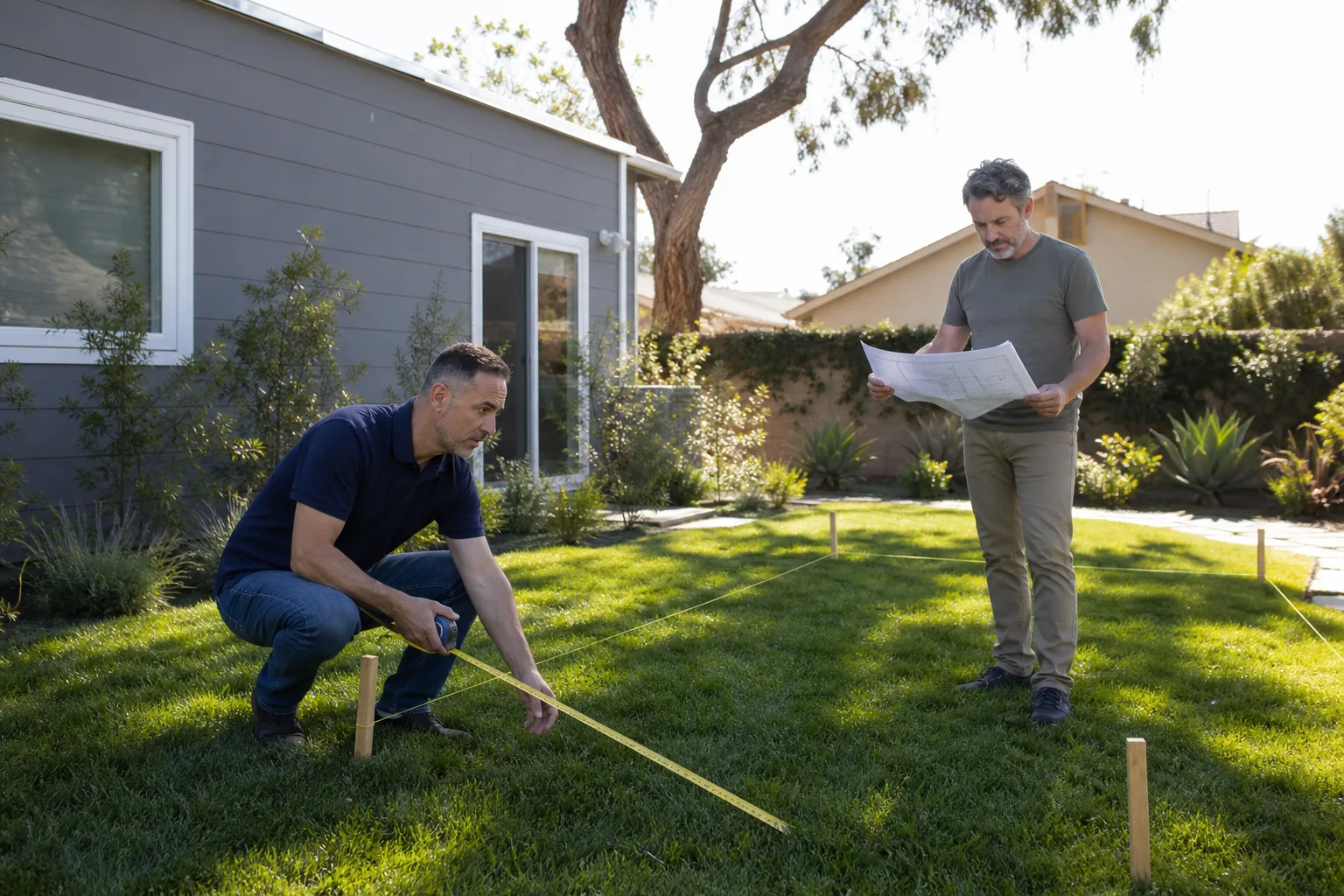
The honest picture: Mighty Buildings ships a near-complete shell, but the ground under it and the utilities feeding it are on you. That’s where a bad estimate shows up first. In Riverside, we see lots in the Wood Streets with 1920s-era gas and sewer lines that need careful hand-digging, and newer tracts in Orangecrest where the soil compacts differently and changes how we spec the foundation piers. This page is the resource we wish every Mighty Buildings owner had before the truck arrives.
Which Mighty Buildings Models This Applies To
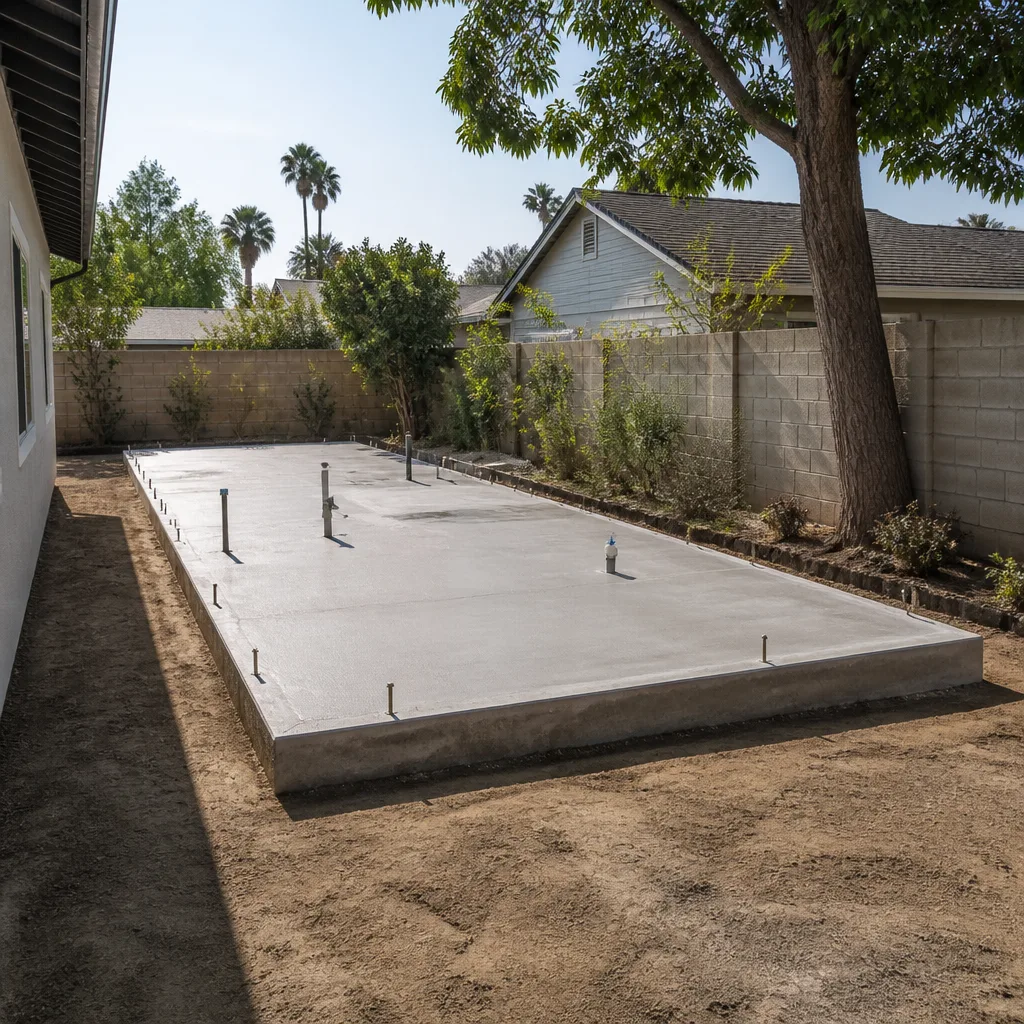
Every Mighty Buildings Mighty House and ADU model (the Mighty Accessory Dwelling Unit series, Mighty House, and larger Mighty Duo configurations) sits on the same basic site prep package: foundation system, utility stubs, and connection points matched to the panel floor cassettes. The compatibility gotcha we see most in Riverside is with the foundation anchor pattern. Mighty Buildings’ steel chassis uses a specific 16-inch on-center anchor requirement in most current production runs, but some earlier units shipped with 20-inch spacing, and if your site crew drills the wrong layout, the panel cassettes won’t seat correctly without field modification that voids the factory install spec.
Before you order any site work, check the VIN plate bolted to the steel frame near the front corner. It lists the exact model series, production date, and anchor-spacing code. Screw it up and you’ll pay for concrete coring and epoxy anchors that were never in the original written price. We also stock OEM-level anchor kits and quality aftermarket equivalents from Simpson Strong-Tie and USP, which match Mighty Buildings’ galvanized steel specs and hold up in Riverside’s alkaline soil without the corrosion issues we see with cheaper imports.
Signs Your Mighty Buildings Site Prep & Utilities Is Failing
If your unit is already set and something’s off, here are the five symptoms Riverside owners report most often, along with what’s actually happening underneath:
- Doors stick or the floor feels slightly off-level. Clay-heavy Riverside soil expands and contracts through wet and dry seasons. If the foundation piers weren’t drilled to the right depth (typically 24 to 36 inches in our service area), the whole unit moves a fraction of an inch, and the panel seams telegraph it.
- Water pressure drops when you run two fixtures at once. The main service line feeding a Mighty Buildings unit needs a minimum 3/4-inch supply, but plenty of older Riverside lots only run 1/2-inch from the meter. If your shower sputters when the washer fills, the prep crew undersized the stub-out.
- Electrical panel trips on the heat or AC kick-on. Mighty Buildings’ mini-split systems pull a specific amp draw at startup. If the feeder from your main panel was sized for a conventional stick-built ADU instead of the unit’s actual spec, the breaker does its job and trips.
- Water pools near the foundation edge after rain. Riverside gets flash storms, not Seattle drizzle. If the site grading wasn’t sloped to a drainage swale or French drain, water sits against the steel chassis and accelerates corrosion at the anchor points.
- Sewer smells inside, especially after heavy use. This one’s almost always a back-pitched drain line from the rough-in, or a missing cleanout that lets gas back up. It’s a code failure, and it’s cheaper to catch before the unit is set.
Replacement Cost & What’s Included
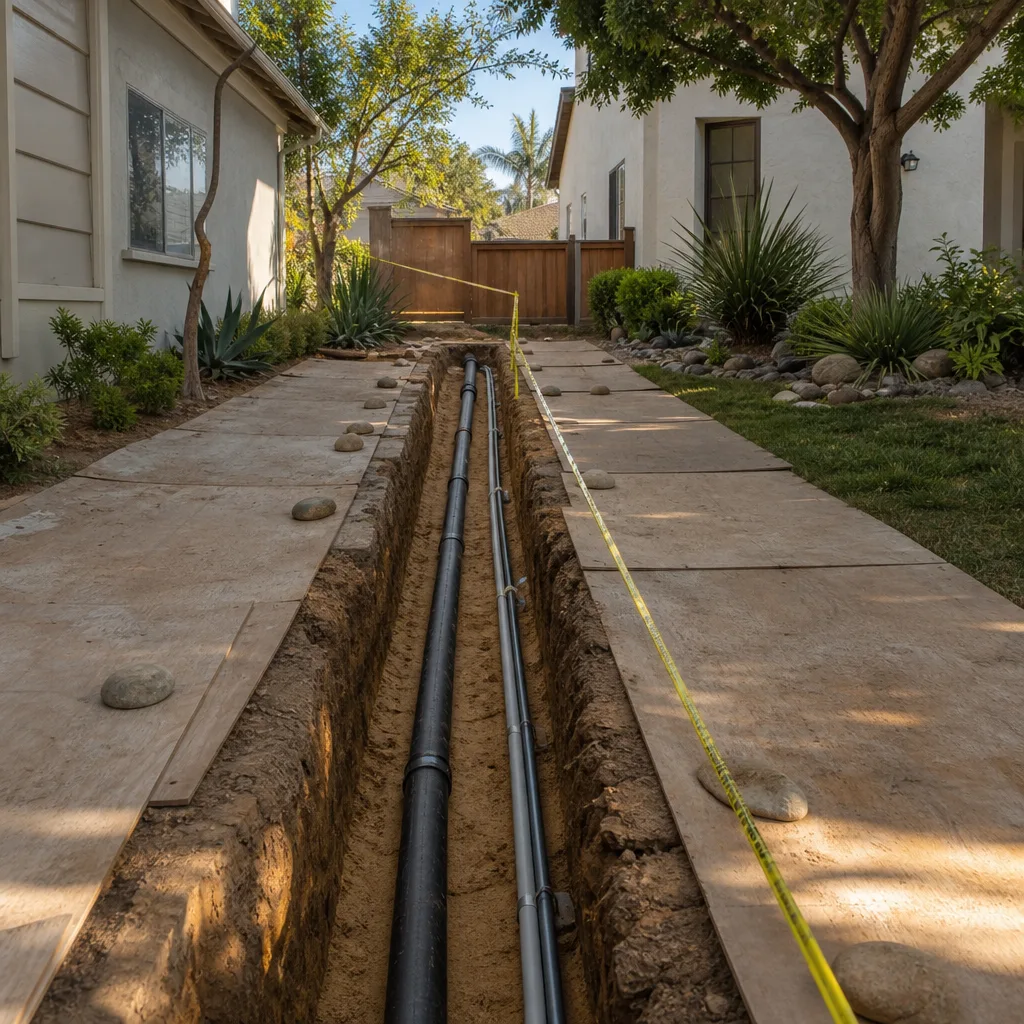
For Riverside lots, here’s what we quote in writing before any work starts:
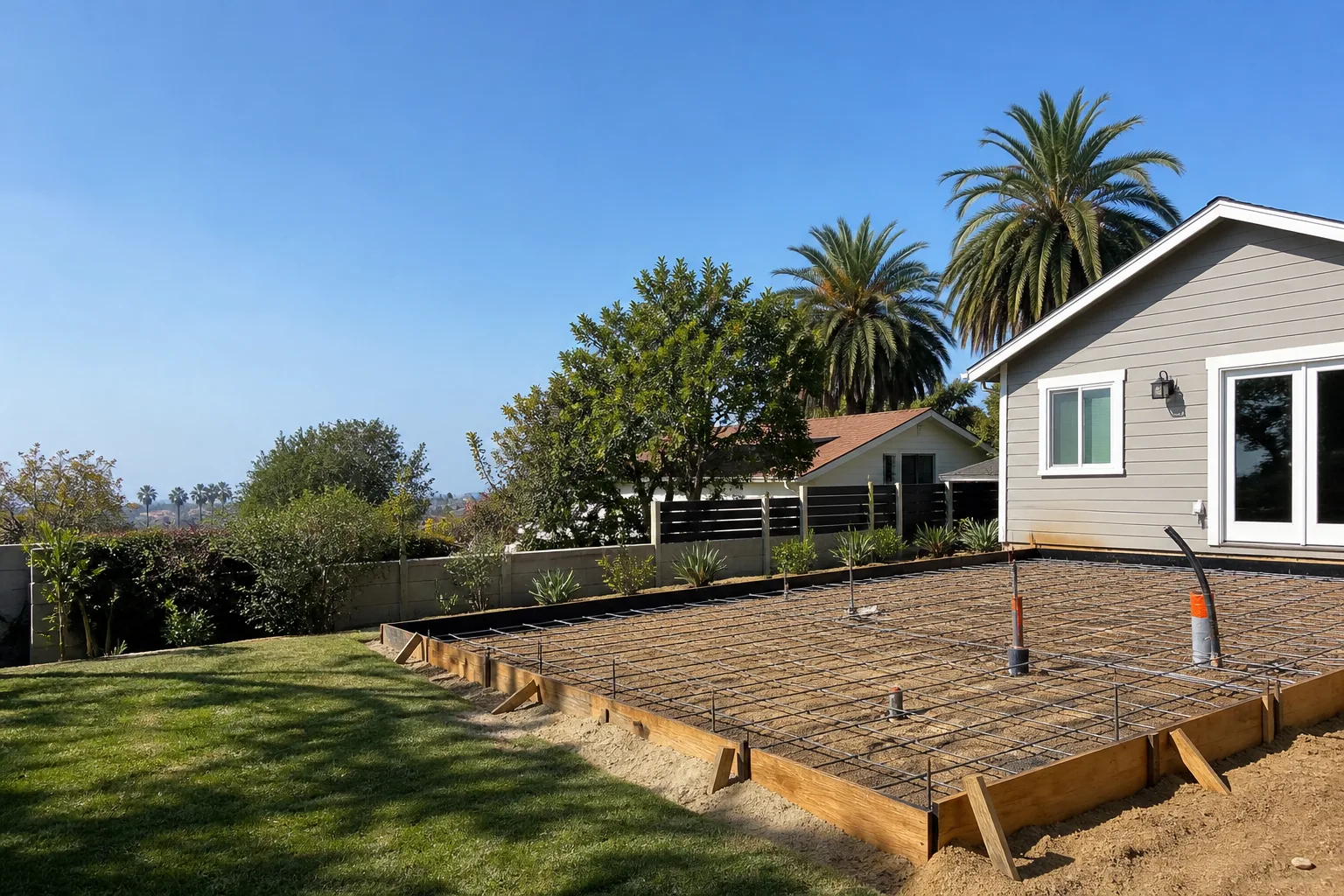
- Foundation piers and anchoring (400 – 800 sq ft unit): $8,500 – $16,000, depending on soil bearing and pier depth.
- Electrical service upgrade and feeder run (up to 100 ft from main panel): $4,000 – $9,000, including trench, conduit, wire, and a new subpanel rated for Mighty Buildings’ specs.
- Water line installation, including meter tap and stub-out: $2,500 – $6,500, depending on distance and whether Riverside Public Utilities requires a separate meter.
- Sewer connection and cleanout: $3,000 – $8,000, driven by depth (older Riverside mains are shallow in some areas, deep in others) and whether we’re tying in or running a new lateral.
- Site grading, drainage, and compaction (on a typical 5,000 – 7,000 sq ft lot): $3,500 – $9,000, including haul-off if the dirt’s unusable.
These ranges include all parts, labor, permit coordination, and our 365-Day Done Right Promise in writing. No change orders appear after demo starts unless we hit something truly invisible, and in that case, you get a written addendum with a photo of what we found before we touch it. We want you to price this out with other Riverside contractors, and expect our numbers to be transparent about what the other guys leave out.
Do You Pull the Permits?
Yes. Benson ADU Riverside pulls the permit, schedules the inspections, and stands next to the Riverside county or city inspector on the day of the final walk-through. That’s not a favor; it’s the way we’ve done it from the start. If a permit is required, we’re the ones who get the correction notice, not you. If a job doesn’t need a permit (some simple electrical disconnect/reconnect work), we’ll say so.
Put it in writing before you pick up a shovel, that’s not distrust, that’s just how a good job starts.
DIY or Call Us?
Here’s the honest split. You can safely check a few things yourself on an existing Mighty Buildings site: walk the perimeter and look for standing water after a storm, check the panel anchor bolts for obvious rust, confirm your water pressure with a $10 gauge from any Riverside hardware store, and see whether your breaker matches the amperage listed on the unit’s spec sheet. Those checks cost you nothing and tell you whether you even need us.
What you should not DIY is anything involving live electrical feeders, gas lines, or sewer connections. A miswired subpanel for a Mighty Buildings unit can energize the steel chassis, and that’s a lethal hazard, not a handyman project. Same goes for digging near marked gas lines. Riverside has active gas, water, and underground electric easements in places you won’t see until a ticket from 811 comes back. We carry the liability, the trenching equipment, and the experience to do it without turning your backyard into a geometry problem.
If you’re unsure whether what you’re seeing is normal or failing, call us at (831) 231-0809. We’ll ask for a few photos and tell you straight whether a service call makes sense. No charge for the phone time.
FAQs
A properly installed foundation and utility package on a Mighty Buildings unit in Riverside should last the life of the structure: 50+ years for the concrete and anchors, and 30 to 40 years for standard electrical feeders and water lines before any meaningful degradation. The weaker points are drainage systems (10 to 15 years before they need cleaning or repair) and utility connections exposed to our alkaline soil, which show corrosion faster than in coastal parts of California. If the original install was done to factory spec and passed final inspection, you shouldn’t be thinking about this again for decades. Call (831) 231-0809 if you want a second opinion on an existing install.
In many cases, yes. We can add helical piers to stabilize a shifting foundation, replace a single undersized feeder line while leaving the rest of the site work intact, or re-grade a drainage swale without disturbing the unit. What typically can’t be repaired cost-effectively is a utility stub buried at the wrong depth or a foundation anchor pattern drilled off-spec, because the fix costs nearly as much as a redo. We’ll always show you the numbers for both options in writing, and we’ll tell you if repair makes sense or if you’re throwing good money after bad. Call us for a free site evaluation.
For a standard Riverside residential lot with no surprises, we schedule 5 to 10 working days from first trench to final inspection, plus whatever time the county and city need to process the permit and schedule the inspector. Surprises, like an old septic tank we hit in a Mission Inn district lot, or utility easements that require coordination with Riverside Public Utilities, can extend the timeline. We give you a written schedule up front and update you with photos as each phase finishes, so you always know exactly where the job stands. Call (831) 231-0809 to get a written schedule for your specific site.
We stock the common compatibility items on our trucks: galvanized anchor kits in both the 16-inch and legacy 20-inch patterns, panel connector hardware, subpanel breakers rated for the mini-split startup loads, and 3/4-inch water line material. For specialized items, we order direct from Mighty Buildings’ sanctioned parts channels when factory hardware is required to preserve a warranty. We also work with Abodu, Cover, and Dvele units, so our parts inventory covers the broadest range of prefab compatibility in Riverside. Call (831) 231-0809 and we’ll confirm what’s on the shelf before you schedule.
Written by Troy Eastman, Owner & Project Lead, Benson ADU Riverside at Benson ADU Riverside, serving Riverside and nearby areas.